

TMS Therapy Age Limit and Eligibility Guidelines
TMS therapy age limit explained. Learn how age affects eligibility, safety considerations, and who may qualify for treatment.

At 17, depression can disrupt school performance, sleep patterns, and focus. At 70, it may show up as low energy, slowed thinking, or loss of interest. As treatment plans move beyond standard antidepressants, age becomes a practical consideration. Many people want to know whether there is a clear cutoff that determines eligibility for TMS.
Transcranial magnetic stimulation is FDA-cleared for adults with treatment-resistant depression, with growing research in younger and older populations. Keep reading to understand how age, evidence, and clinical judgment intersect in real-world TMS eligibility decisions.
For those seeking individualized guidance, visiting charakcenter.com can provide more information about comprehensive evaluations and available treatment options grounded in current clinical standards.
How TMS Works
Transcranial magnetic stimulation (TMS) is a noninvasive brain stimulation treatment that uses focused magnetic pulses to influence activity in specific areas of the brain. A coil placed against the scalp delivers brief, controlled pulses that generate small electrical currents in the underlying cortex. No surgery. No anesthesia. No systemic medication exposure.
TMS most commonly targets regions of the prefrontal cortex involved in mood regulation. In conditions like major depressive disorder, these neural circuits can show reduced or dysregulated activity. Repetitive stimulation is designed to modulate firing patterns within these networks and support more balanced communication between brain regions tied to emotion and executive function.
Age becomes relevant because brain structure and connectivity change across the lifespan. Neurodevelopment in younger individuals and age-related changes in older adults are factors researchers consider when evaluating safety and treatment response.
How Age Eligibility for TMS Is Actually Determined
Age eligibility for TMS is shaped by regulatory approval, clinical evidence, and structured medical screening. It is not based on opinion or informal cutoffs. Age is considered within a broader safety framework.
FDA Clearance
%20Device%20Close-Up.png)
In the U.S., TMS is FDA-cleared for adults with major depressive disorder who have not responded to antidepressants. Some systems now include adolescent indications under defined criteria. These approvals reflect where safety and efficacy data meet regulatory standards.
FDA clearance signals evidence strength. It does not automatically exclude individuals outside studied ranges, but it guides standard practice.
Clinical Evidence
Age groups are studied separately because brain development, medical comorbidities, and medication profiles differ across the lifespan. Researchers evaluate response rates, side effects, and tolerability within defined populations.
Where data are limited, clinicians rely on established safety protocols and current research.
Individual Evaluation

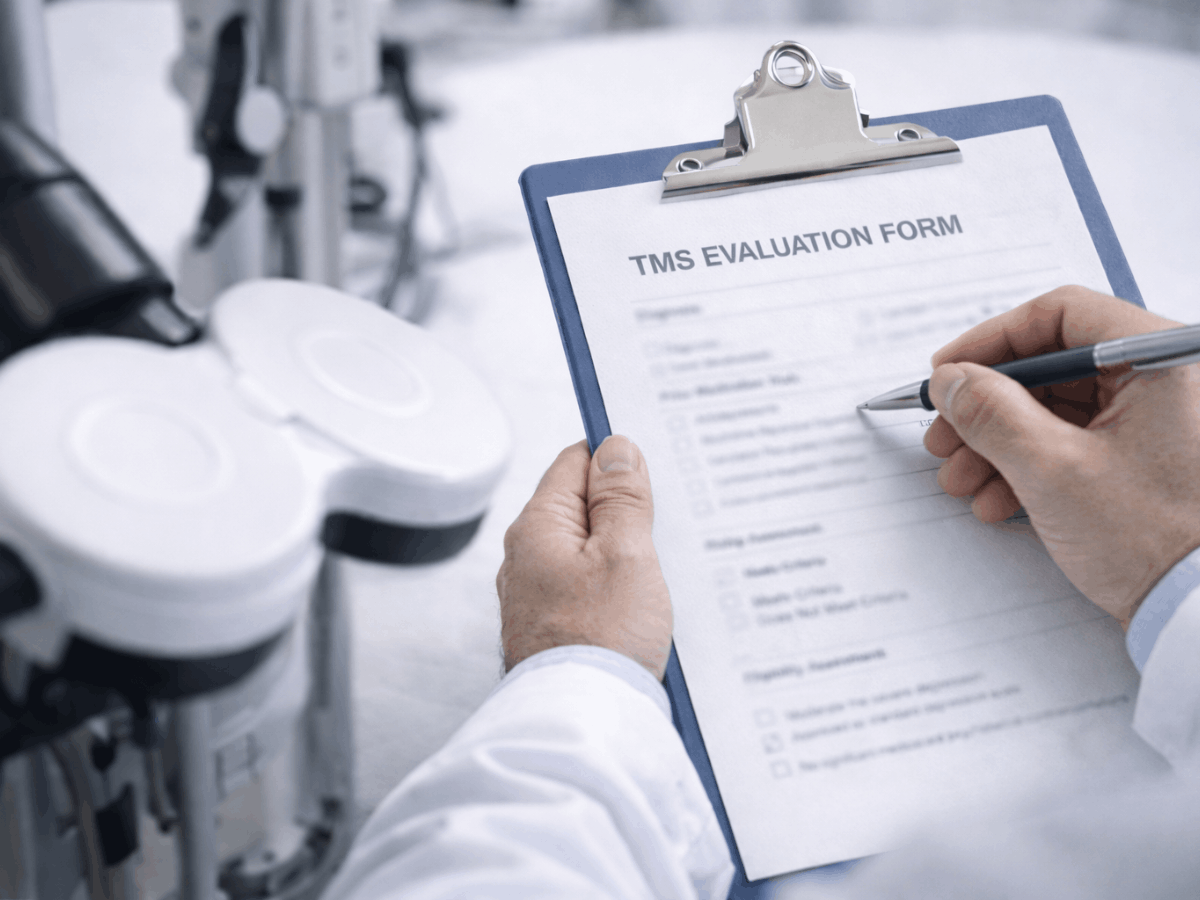
Eligibility also depends on diagnosis, seizure risk, neurological history, implanted devices, and overall medical stability.
Age informs that assessment, but it is rarely the sole deciding factor. Clinicians consider diagnosis, medical stability, and neurological risk within an evidence-based framework, often informed by ongoing clinical research.
Is There a Minimum or Maximum Age for TMS?
About 50–60% of patients with treatment-resistant major depression experience significant improvement with repetitive transcranial magnetic stimulation. Because TMS shows measurable clinical benefit, age parameters are defined more clearly at the lower end than the upper end. Regulatory guidance and clinical evidence shape eligibility within modern medical practice.
Minimum Age
- Most systems using transcranial magnetic stimulation rTMS are FDA-cleared for adults 18 and older for treating major depressive disorder, particularly after unsuccessful medication trials with antidepressant medications.
- Certain devices now include adolescent patients as young as 15, supported by randomized controlled trials showing statistically significant improvement in depressive symptoms as a primary outcome measure.
- These approvals are specific to the indicated patient population and treatment parameters studied in clinical trials, not all psychiatric disorders.
- Evidence for younger patients is based on defined outcome measures such as changes in the Patient Health Questionnaire or Beck Depression Inventory during an acute treatment course.
Maximum Age
- There is no FDA-established upper age limit for repetitive TMS or deep transcranial magnetic stimulation.
- Older adults with major depression, including those experiencing a major depressive episode or treatment resistance, may receive TMS treatment if medically appropriate.
- Advanced age alone is not considered a contraindication in evidence-based medicine or American Psychiatric Association guidance.
- Screening focuses on neurological safety, motor threshold testing, and minimizing adverse events rather than age itself.
Clinical Considerations
- Final eligibility depends on diagnosis, severity of depression symptoms, and prior response to traditional treatments such as talk therapy or antidepressant medications.
- TMS is a non invasive treatment in which a coil delivers magnetic pulses to targeted areas of the brain involved in mood regulation.
- It may be used during the acute phase to relieve acute symptoms in patients diagnosed with major depression, obsessive compulsive disorder, or other mental health disorders.
- Professional guidance from organizations such as the Clinical TMS Society and American Psychiatric Association informs treatment sessions, daily treatment session protocols, and overall treatment course planning.
Common Misconceptions About Age and TMS
Transcranial magnetic stimulation (TMS) therapy has been shown to help many individuals with treatment-resistant major depression, with approximately 30–35% achieving full remission in clinical studies. Even with these documented outcomes, age-related assumptions can influence how TMS eligibility is interpreted. Several of those assumptions do not reflect current evidence or regulatory guidance.
“TMS Is Only for Younger Adults”
TMS is commonly associated with working-age adults because that population was heavily represented in early clinical trials. However, older adults are regularly evaluated and treated when medically appropriate. Age alone does not exclude someone from consideration.
“Teens Cannot Receive TMS”
While earlier approvals focused on adults 18 and older, certain TMS systems now include adolescents under defined criteria. Eligibility depends on regulatory clearance, diagnosis, and safety screening — not a blanket prohibition based on age.
“There’s a Hard Age Cutoff”
There is a minimum age tied to FDA clearance, but there is no universal maximum age. Candidacy is determined through structured clinical evaluation, including psychiatric history, neurological risk factors, and overall medical stability.
Eligibility is determined through a structured clinical review that considers diagnosis, treatment history, medical stability, and coordinated support services such as case management when appropriate.
Moving Forward With a Clinical Evaluation
Questions about age are entirely reasonable when considering TMS therapy. What matters most, however, is not a specific number, but a careful, evidence-based evaluation of the individual. While FDA clearance establishes a regulatory minimum age, there is no fixed upper age limit for treatment. Beyond that minimum, eligibility is determined by diagnosis, overall medical stability, neurological risk factors, and a thorough clinical screening process.
To explore whether TMS aligns with your clinical profile, call 1-855-4 CHARAK (1.855.424.2725) or submit the contact form to begin a structured evaluation process.